Why retaining wall permits in Atlanta matter
Atlanta’s rolling Piedmont terrain, red clay soil, and heavy rain create real pressure on yard slopes and structures. Hydrostatic pressure builds fast in saturated clay. Lateral earth pressure surges when a wall supports a driveway, a patio, or a steep cut. A small miscalculation can cause wall failure, leaning, or cracking that threatens nearby foundations. That is why the City of Atlanta and Fulton County treat retaining walls as engineered structures. Most walls that support a surcharge, sit near a property line, or exceed a set height require permits and engineered drawings.
This article explains permit rules in Atlanta in clear terms and shows how a retaining wall structural engineer reviews, designs, and documents a safe wall. It also covers local soil conditions, typical failure modes, inspection checkpoints, and how proper engineering streamlines approvals. The goal is simple: help homeowners in Atlanta, Buckhead, Midtown, Virginia-Highland, Morningside, Chastain Park, and nearby areas plan a code-compliant wall that stands up to Georgia storms.
What the City of Atlanta looks for
Atlanta follows the International Residential Code (IRC) and the International Building Code (IBC) with local amendments. The city pays close attention to height thresholds, surcharge loading, and water management. A permit is generally required when a wall exceeds a prescribed height, supports a slope or load above, sits close to public rights-of-way, or affects drainage patterns. In-fill lots and older neighborhoods like Ansley Park, Inman Park, and Druid Hills often trigger closer review due to steep grades and mature trees. The city and Fulton County also protect adjacent properties. If a wall sits along a shared boundary in Sandy Springs or near a BeltLine spur trail, reviewers will check for footing encroachment, drainage impacts, and stability under saturated conditions.
Plan reviewers prioritize four points. First, an engineer must address lateral earth pressure using site-specific soil parameters. Second, the design must relieve hydrostatic pressure with weep holes, drainage pipes, and free-draining backfill. Third, footing details and bearing capacity must suit red clay and any fill soils on site. Fourth, surcharge loading must account for driveways, vehicles, fences, pool decks, or slopes near the wall crest. These items belong on stamped drawings from a Georgia Professional Engineer.
When a permit is required in Atlanta
Local thresholds vary by zoning and site condition, but homeowners should expect a permit when a wall is taller than low garden edging and supports any load beyond simple landscaping. Atlanta’s “Residential Retaining Wall” rules emphasize walls that exceed a specific height, sit within setbacks, or alter drainage. Many neighborhoods in 30327 and 30305 include steep, high-elevation lots where even a four-foot wall can carry surcharge from a driveway or home foundation. That condition typically requires engineered design and a permit.
Expect the city to ask for stamped drawings if the wall is higher than the minor-work threshold, located within a flood-prone drainage path, or tied into another structure. Combined terraced walls can count as a single system if the spacing is tight, so stacking short walls does not always bypass permitting. In Buckhead, Morningside, and Virginia-Highland, inspectors often see tiered walls on narrow lots. If the vertical spacing is small or the upper wall surcharge loads the lower wall, the city treats the system as one engineered structure.
Role of the retaining wall structural engineer
A structural engineer analyzes the site, the soil, and the required wall function. The engineer coordinates with a civil engineer for grading and drainage, with a geotechnical engineer for soil parameters, and with a land surveyor for boundary and elevation control. The output is a package: stamped drawings, structural calculations, drainage sections, material specs, and a construction sequence. This package speeds up permit review and guides the installer in the field.
In Atlanta, effective designs address red clay’s low permeability and high swell potential. The engineer sets a footing below frost depth and below the seasonal zone of soil movement. The design includes geogrid reinforcement in segmental retaining walls, weep holes or drains at set spacing, clear backfill gradation, and geotextile separation from native clay. For reinforced concrete or cantilevered walls, the engineer checks overturning, sliding, bearing, and global stability. For gravity walls, the engineer confirms unit weight, wall batter, and embedment. If the wall supports a driveway near Piedmont Park or a parking area near Mercedes-Benz Stadium, the engineer quantifies surcharge loading and may call for deadman anchors or a deeper heel.
Atlanta’s soil and rainfall change design choices
The Piedmont profile includes dense red clay with pockets of weathered rock and historic fill. During summer storms, the top layer saturates fast, and water backs up behind impermeable walls. Without proper drainage, pore pressure rises, and effective stress drops along the failure plane. Walls that lack weep holes, drainpipes, or free-draining backfill often show bulging, leaning, or step cracking within the first two rainy seasons.
A design that works in arid regions fails in Atlanta’s wet months. That is why the city expects calculations and sections that prove pressure relief. Engineers specify perforated pipes at the heel, wrapped in filter fabric, sloped to daylight or a catch basin tied to the site’s drainage plan. Weep holes appear at consistent spacing in concrete walls, set just above finished grade on the face. Segmental retaining wall systems require clean, angular backfill with geogrid layers at defined elevations and lengths. For tall or surcharge-loaded walls, an inclinometer plan may be added to monitor movement during and after construction.
Common failure symptoms inspectors see
Leaning and rotation are early signs of inadequate base width, poor bearing, or misjudged lateral earth pressure. Bulging can indicate missing geogrid or improper compaction in reinforced zones. Water seepage lines or efflorescence on the face point to blocked drains and rising hydrostatic pressure. Cracks at control joints or random shear cracks reveal settlement or unrelieved stress. Soil erosion at the toe exposes shallow embedment or missing scour protection. These issues appear across Atlanta, from steep cul-de-sacs in 30327 to tight alley lots in 30306 and 30308. The root cause is almost always a mix of poor drainage, weak backfill, insufficient reinforcement lengths, or missing surcharge checks.
Permitting steps for homeowners
A smooth permit begins with a clear site plan. A land surveying team maps property lines, easements, and topography. The civil engineer drafts grading and drainage plans that show where runoff goes during design storms. The structural engineer designs the wall and stamps the drawings. Those drawings show footing depth, backfill specs, weep hole spacing, geogrid types and lengths, and any deadman anchors. The package also includes load cases, soil parameters, and construction notes for compaction and sequencing.
The City of Atlanta and Fulton County require submittals through their portals, including plan sets in PDF and sometimes calculations as separate files. Reviewers may ask for minor edits on drainage tie-ins or surcharge labeling. Responding with clear markups shortens the cycle. For residential walls near sensitive sites like the BeltLine or near Chastain Memorial Park, the city may require tree protection plans or additional erosion control measures. Final approval sets inspection milestones: footing or base preparation, reinforcement placement, drainage installation, and final elevation checks.
Height thresholds and combined walls
Atlanta’s review often hinges on height and function. A short garden wall without surcharge may fall under minor work, but that condition is rare on steep lots in Buckhead, Sandy Springs, or Brookhaven. Terraced systems need careful reading. If spacing between tiers is small or if the upper wall pushes load onto the lower wall, the city can treat the assembly as one wall for height and stability checks. In Virginia-Highland and Morningside, tight setbacks encourage terraces. The engineer must show that each tier stands on its own bearing layer, that grid lengths reach stable soil, and that overall global stability meets factors of safety under saturated conditions.
Materials Atlanta engineers trust
Segmental retaining wall (SRW) systems from Belgard and Keystone perform well when paired with proper geogrid and drainage. Reinforced concrete suits sites with limited room for geogrid or where architectural finishes are desired. Gabion baskets handle high-flow zones and steep channels seen near culvert outlets in Smyrna and Vinings. Timber sleepers show up on older properties but require careful footing and drainage upgrades to extend life. Gravity walls need mass and embedment; in clay, that means unit selection, batter, and keying the base to resist sliding.
Component details matter. Footings must bear on competent material, not on old fill or topsoil. Backfill should be free-draining, often No. 57 stone or similar gradation, wrapped with geotextile to isolate native clay. Weep holes should discharge freely. Geogrid strength, spacing, and embedment lengths must match calculations, not rule-of-thumb. Deadman anchors help in retrofit conditions or where space behind the wall is limited. Compaction equipment must achieve the density the design requires without disturbing facing units or over-stressing fresh concrete. Laser levels help confirm lift thickness, line, and grade on long runs.
What inspectors in Atlanta actually check
Inspectors look for conformity to the stamped drawings. They often check the base excavation depth and width, confirm the presence and slope of drainpipes, and review filter fabric placement. For SRW, they look for correct geogrid elevation, correct grid orientation, and proper connection to the face units. For concrete walls, they check reinforcement size, spacing, cover, and joint placement. During final inspection, they confirm weep hole discharge, grading away from the wall, and protection of adjacent structures. In flood-prone areas of 30318 and 30319, they may also check tie-ins to storm structures and scour protection at outfalls.
How surcharge changes the design
Surcharge is any extra load behind the wall: a driveway near Georgia Institute of Technology, a patio overlooking Piedmont Park, a fence, or a slope crest. The engineer translates that load into added lateral pressure and overturning moments. In practice, surcharge can add 20 to 100 percent to the design demand depending on geometry. That is why a three-and-a-half-foot wall beside a driveway in Chastain Park can require permits and stamped drawings even though the height looks modest. The surcharge makes it a structural wall, not just landscaping.
Cost and schedule signals from experience
Most homeowners ask two questions: how long and how much. A simple engineered SRW between 3 and 6 feet with clear access can often be designed in one to two weeks and permitted in two to six weeks, depending on review volume. Construction can run one to two weeks for straight runs, longer for curves, tight access, or staged work near trees and utilities. Costs vary widely based on height, length, access, and material, but engineering and permitting are a fraction of total project cost and save significant money by preventing rework.
Delays usually trace back to incomplete site data or late drainage tie-ins. Starting with a current survey, clear utility locates, and an early drainage concept avoids back-and-forth with the city. In older neighborhoods like Ansley Park and Druid Hills, plan for roots and shallow utilities. Coordinate tree protection early to avoid design revisions.
Choosing wall type for Atlanta conditions
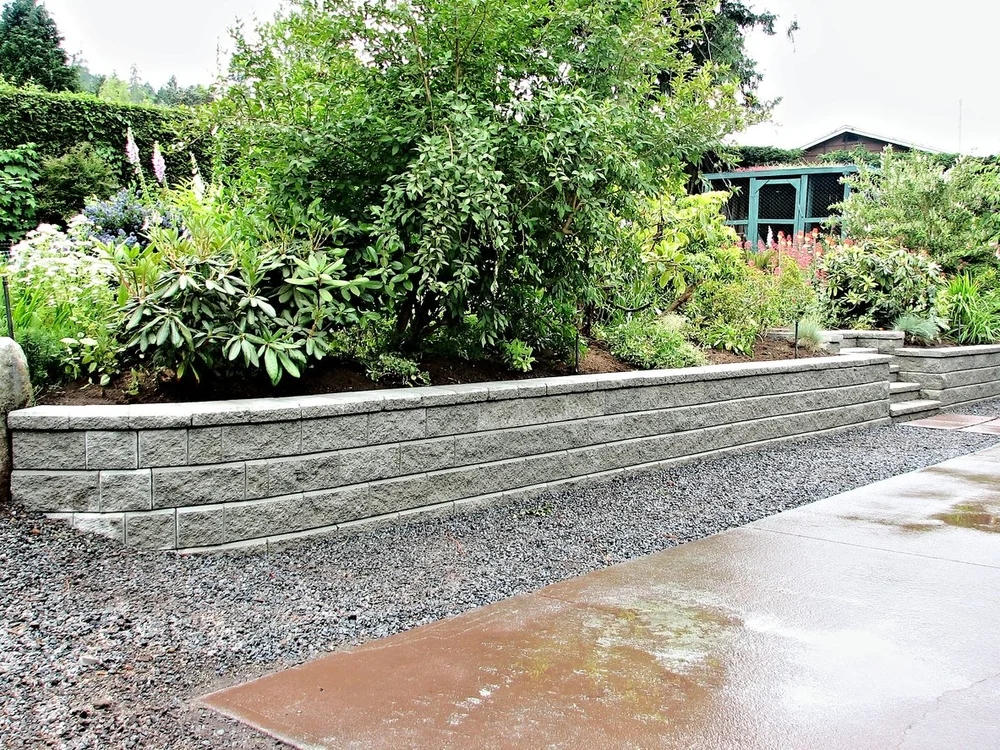
SRW with geogrid suits many residential yards due to its modularity and drainage-friendly design. Cantilevered reinforced concrete walls work well when setback is tight and the site cannot spare geogrid lengths. Gravity walls fit small height increases where mass can resist sliding and overturning. Gabion baskets handle banks along creeks and storm channels that receive high flows after Atlanta summer storms. Timber installations can be serviceable for temporary or low-height use but require special attention to drainage and lifespan planning.
The engineer weighs soil shear strength, groundwater condition, available embedment, aesthetics, and nearby loads. In a narrow Buckhead lot with a driveway near the edge, a cantilevered wall with weep holes and a pipe to a catch basin may outperform an SRW due to limited reinforcement length. Near the BeltLine where soft fill can appear, the design may call for over-excavation, a granular working platform, and higher factors of safety for sliding and bearing.
Drainage: the make-or-break detail
Hydrostatic pressure causes more failures than any other issue in Atlanta. A proper design uses clean stone backfill behind the wall, a perforated pipe at the base sloped to daylight or a storm structure, and filter fabric to keep fines out of the stone. Weep holes on solid facing relieve trapped water at the face. Surface grading must shed water away from the wall crest, not toward it. Downspouts and sump discharges should never daylight behind a wall. If groundwater is persistent, the engineer may specify a vertical drainage board and a larger discharge pipe, or a tie-in to a yard inlet with enough capacity for peak storms.
Inspection, testing, and quality control
On engineered walls, field QC matters. Compaction tests confirm lift density. Installers use laser levels to hold grade, and inclinometers on tall or critical walls can track movement during staged backfill. Soil testing kits help verify moisture control for compaction. For concrete walls, inspectors verify bar placement before pour and may ask for cylinder breaks. For SRW, they check geogrid tensioning and overlap rules from NCMA guidelines. ASCE references inform safety factors, while ICC codes shape minimum detailing. Local inspectors in Fulton County want photos of pipe bedding and backfill layers before they get covered.
How permit rules differ across nearby jurisdictions
Within the Atlanta metro, rules change at city lines. Sandy Springs and Brookhaven share many standards with Atlanta but can vary on thresholds and submittal formatting. Decatur often emphasizes stormwater tie-ins on small lots. Dunwoody, Roswell, Alpharetta, Smyrna, Vinings, and Marietta may require separate site development permits for larger projects. The engineering logic does not change: address earth pressure, manage water, protect adjacent property, and prove stability. A team that works weekly with City of Atlanta reviewers moves faster through comments and inspections.
Case insight: a Buckhead driveway wall near 30327
A homeowner on a steep lot above Chastain Park needed a four-foot wall to widen a driveway. The surcharge from vehicles and the proximity to the property line triggered a full permit. The retaining wall structural engineer selected a cantilevered reinforced concrete wall with deep footings bearing on dense clay. The design used strategic weep holes, a perforated drainpipe to a curb inlet, and a geotextile layer to separate clay from stone. During construction, compaction equipment ran at controlled passes to protect adjacent pavement. The inspector checked reinforcement before pour and verified weep hole placement. The result has held through multiple summer storms without movement or seepage staining.
Case insight: SRW in Virginia-Highland with tight setbacks
An older property needed a six-foot elevation change along a path in 30306. An SRW with Belgard units and geogrid fit the aesthetic and allowed step-backs to soften the face. The design relied on long geogrid layers and clean stone backfill to keep hydrostatic pressure low. Laser levels controlled lift height and batter. A short terrace was added to reduce global stability risk at the toe. The permit reviewer asked for a surcharge note about a nearby fence. The engineer updated the calc sheet and resubmitted. Approval arrived within two weeks. The wall drains cleanly during heavy rain and shows no settlement.
What must appear on engineered drawings
Permitting in Atlanta moves faster when drawings include plan, elevation, sections, notes, and calculations in clear form. The set should show wall height at stations, footing embedment, reinforcement details, weep hole locations, drainpipe size and slope, backfill gradation, geogrid types and lengths, deadman anchors if used, and surface grading at the crest and toe. Load cases must include at-rest or active earth pressure as appropriate, seismic if required, and surcharge loading from vehicles, structures, or slopes. The engineer’s Georgia PE stamp and contact information must appear on each sheet with revision dates.
Safety factors suited to Atlanta clay
Designs typically target safety factors in accepted ranges: sliding often 1.5 or higher, overturning 2.0 or higher, bearing below allowable pressure with settlement within tolerance, and global stability above 1.3 for long-term conditions. In saturated seasons, pore pressure reduces shear strength, so conservative parameters for friction angle and cohesion help. Where historic fill is present near the BeltLine or older alleys in Midtown, a geotechnical report provides reliable parameters and may prevent overbuild or underbuild scenarios.
Equipment that improves build quality
Right-sized excavators cut clean benches and reduce over-excavation that wastes stone. Compaction equipment, from plate compactors to rollers, achieves target density in lifts without displacing facing units. Laser levels keep elevation and batter consistent. Soil testing kits help track moisture during compaction. Inclinometers on critical walls catch movement trends early. Together, these tools support the design intent and protect against callbacks after the first big storm.
Answering common homeowner questions
Can a contractor build without an engineer if the wall is short? In many Atlanta cases, no. If surcharge is present or height thresholds are met, a permit and stamped drawings are required. Can drains daylight on a neighbor’s property? No. Discharge must stay on site or tie into an approved system. Will gravel backfill wash out? Clean, angular stone with filter fabric remains stable; fines stay out, and water moves freely to the drain. Is terracing always easier to permit? Not always. If the tiers interact, the city treats them as one structure. Is timber acceptable? Yes for select cases, but lifespan and drainage need careful planning given Atlanta rainfall.
Local relevance and service coverage
Homeowners across Atlanta zip codes 30303, 30305, 30306, 30308, 30309, 30318, 30319, 30324, 30327, and 30342 face the same clay and rain challenges, but lot shapes vary. Buckhead and Chastain Park include steep driveways and tight setbacks. Midtown and Ansley Park bring historic edges, tree protection, and tight access near landmarks like Bobby Jones Golf Course and the Swan House. Morningside and Virginia-Highland feature old fills and brick patios close to slopes. Neighboring areas like Decatur, Brookhaven, Vinings, Smyrna, Marietta, Roswell, Alpharetta, and Dunwoody share similar permitting logic with small differences in forms and thresholds. A team fluent in each office’s process saves time and revision cycles.
Standards, brands, and compliance
Engineers in Atlanta follow ASCE guidance for loading and stability and NCMA guidance for SRW construction and geogrid layouts. The ICC family of codes informs design minima and detailing. For segmental systems, Belgard and Keystone provide tested components with connection data, face unit properties, and construction manuals. Using recognized brands and reference standards reduces plan-review questions and helps inspectors verify installation steps in the field.
What a professional retaining wall structural engineer delivers
The engineer provides site-specific calculations, stamped drawings, and a construction sequence suited to Atlanta’s red clay and storm patterns. The design addresses footing depth, drainage path, surcharge loads, and global stability. The package integrates civil grading, land surveying, and permit acquisition, then follows through with field checks when needed. This approach reduces change orders, avoids stop-work notices, and keeps walls true through the wettest weeks of summer.
A concise homeowner checklist
- Obtain a current survey with elevations and property lines.
- Hire a Georgia PE to design and stamp the wall plans.
- Show drainage routes, weep holes, and backfill specs on drawings.
- Submit to the City of Atlanta or Fulton County and respond to comments fast.
- Build with compaction testing, laser level control, and photo records for inspections.
Why engineering first saves money in Atlanta
Rebuilding a failed wall after one storm season costs far more than doing it right the first time. Improper lateral earth pressure assumptions, missing weep holes, and short geogrid are the common culprits. A PE-stamped plan improves bids because contractors price the same scope. Inspectors approve faster when details are clear. And the finished wall protects adjacent foundations, hardscapes, and property lines for years.
Heide Contracting’s role in permits and design
Heide Contracting serves homeowners and property managers across Atlanta with PE-certified retaining wall design, structural assessments, and permit acquisition. The team focuses on site-specific engineering for the Piedmont’s soils, heavy rainfall, and steep grades. Designs cover SRW, reinforced concrete, gravity, gabion systems, and selective timber upgrades. Engineers specify deep footings, weep hole spacing, geogrid reinforcement, and drainage tie-ins that suit Georgia’s red clay. Plans comply with ASCE, NCMA, and ICC guidance and align with City of Atlanta submittal formats. The firm works frequently near Chastain Park, Piedmont Park, and the BeltLine, with strong activity in 30327 and 30305 where high-elevation lots are common.
For premium landscapes in Buckhead and Sandy Springs, Heide Contracting integrates engineering with aesthetics using Belgard and Keystone retaining wall systems. The team is insured and bonded, carries a Georgia Professional Engineer license, and brings over 20 years of local experience. Clients receive stamped drawings and permitting support, plus on-site checks at key stages as needed.
Clear signals that it is time to call an engineer
- New wall higher than a low garden edge, especially with a driveway or patio above.
- Leaning, bulging, or cracking walls after heavy rain.
- Water pooling behind a wall or seep lines on the face.
- Walls near property lines, public sidewalks, or utilities.
- Any project in steep zones of 30327, 30305, 30324, or along BeltLine corridors.
Straight answers about permits in Atlanta
Permits protect safety and neighbor relations. Builders who skip them risk stop-work orders and costly tear-outs. With a retaining wall structural engineer, the permit path is clear: get soil parameters, compute lateral earth pressure, check surcharge, draw real drainage, and document compaction and materials. City reviewers appreciate clean submittals that reflect Atlanta’s red clay and stormwater behavior. Homeowners appreciate a wall that looks right and stays true through summer storms.
Conversion and next steps
Heide Contracting makes the process simple for Atlanta homeowners:
Request a site visit for a structural assessment. Receive PE-stamped engineering drawings and a permit-ready package. Get support through City of Atlanta and Fulton County reviews. Build with confidence using clear specifications for footing, backfill, weep holes, geogrid, and drainage tie-ins.
Service area includes Atlanta zip codes 30303, 30305, 30306, 30308, 30309, 30318, 30319, 30324, 30327, and 30342, plus Decatur, Brookhaven, Vinings, Smyrna, Marietta, Roswell, Alpharetta, and Dunwoody. Projects near landmarks like Georgia Institute of Technology, Mercedes-Benz Stadium, Piedmont Park, Chastain Memorial Park, Swan House, the BeltLine, and Bobby Jones Golf Course receive site-specific engineering to match local grades and drainage.
Call to schedule an engineering consultation. Ask for PE-stamped plans, permit handling, and a structural assessment for your retaining wall. The team will solve soil erosion, hydrostatic pressure, and lateral earth pressure issues with clear, buildable design. Your wall will be engineered to protect your property and comply with Atlanta rules.
retaining wall structural engineer
Heide Contracting provides construction and renovation services focused on structure, space, and durability. The company handles full-home renovations, wall removal projects, and basement or crawlspace conversions that expand living areas safely. Structural work includes foundation wall repair, masonry restoration, and porch or deck reinforcement. Each project balances design and engineering to create stronger, more functional spaces. Heide Contracting delivers dependable work backed by detailed planning and clear communication from start to finish.
Heide Contracting
Phone: (470) 469-5627
Website: https://www.heidecontracting.com, Google Site
Social Media: Instagram, Facebook, LinkedIn
Map: View on Google Maps